
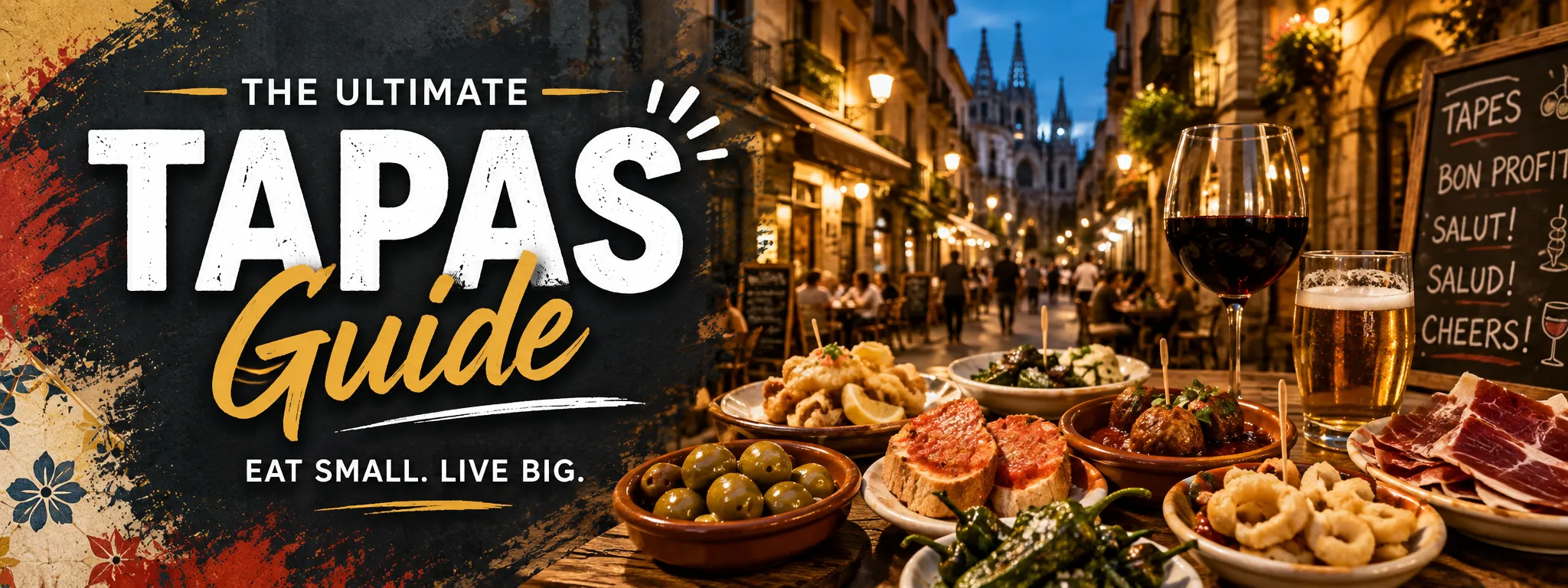
What “tapas” means in Barcelona
Tapas is best understood as a way of eating rather than a rigid category of food. A tapa is a small portion, but Barcelona menus also use words such as platillos for small dishes and raciones for larger sharing portions. In practice, a group might order bread with tomato, olives, croquettes, seafood, vegetables and one or two more substantial plates, then decide whether to keep ordering or move somewhere else.
Barcelona has absorbed tapas culture from across Spain, but the city also has its own Catalan food identity. The most useful approach is not to chase a supposedly definitive “Barcelona tapas list”. Look for seasonal produce, seafood, preserved fish, charcuterie, good bread, local cheeses and straightforward dishes that let ingredients speak for themselves. Barcelona’s official tourism material emphasises Mediterranean products, neighbourhood markets and the social traditions around vermut, bars and shared plates.
Catalan classics worth understanding
Pa amb tomàquet — bread rubbed with ripe tomato, olive oil and salt — is the simplest Catalan staple and a sensible first order. It may arrive already prepared or as bread, tomato and garlic for you to assemble. Other dependable ideas include escalivada (roasted peppers and aubergine), esqueixada (salt cod salad), anchovies, olives, seasonal mushrooms and grilled vegetables.
You will also see dishes associated with wider Spanish tapas culture: patatas bravas, croquetas, jamón, tortilla, fried calamari and boquerones. There is no problem ordering them in Barcelona. The distinction matters only because visitors sometimes expect every local bar to specialise in the same national checklist. Better bars usually have a personality: seafood, conservas, vermut, market cooking, Catalan classics or a more modern small-plate approach.
Vermut: the Barcelona ritual visitors often miss
Fer el vermut — having vermouth with small snacks before lunch — is one of the most useful local habits to know. It is not simply “drinking vermouth”; it describes a social pause built around a drink and something salty or savoury. Olives, anchovies, cockles, crisps and preserved seafood fit naturally here. Barcelona tourism material still presents wine, vermut and tapas as part of the city’s social food culture.
For a visitor, vermut is also an easy way to eat well without forcing every food experience into a late dinner. A midday vermut stop followed by lunch often feels more natural than trying to begin a full evening tapas crawl at 6pm.
How to order without overthinking it
Start by asking what is especially good that day and whether dishes are tapa-sized, half portions or full raciones. Menu terminology is not perfectly standardised, so the portion question is more useful than trying to memorise rules. If there are two of you, begin with three or four small dishes; a larger group can share more broadly.
At traditional bars you may order at the counter and stand, while restaurants and modern tapas bars use normal table service. If you are unsure, wait briefly and watch what other customers do. Staff are accustomed to visitors, and a simple “¿Pedimos aquí o en la mesa?” (“Do we order here or at the table?”) resolves it quickly.
Do not feel obliged to order everything in one round. Adding a dish later is normal. It also avoids the classic visitor mistake of discovering that three “small” plates were actually generous portions after another five are already on the way.
Use neighbourhood markets for context, not just sightseeing
Barcelona’s municipal-market culture is a useful lens on the city’s food. La Boqueria is the famous central market, but it is only one part of a much larger network. Santa Caterina, with its colourful roof near the Gothic Quarter, and Mercat de la Llibertat in Gràcia are useful alternatives for seeing how produce, fish, meat and prepared foods fit into neighbourhood life.
Markets are not automatically cheaper, more “authentic” or free of tourism. The practical value is that they show seasonality and ingredients. Look first, notice what is abundant, and then recognise those products later on menus. If you visit La Boqueria, remember it remains a functioning market rather than a theme park: keep aisles clear, avoid blocking stalls for photographs and buy something if you want to linger at a food counter.
Meal times and the best time for a tapas stop
Barcelona eats later than many visitors expect, but you do not need to imitate the latest possible local schedule. Lunch commonly occupies the early-to-mid afternoon, vermut sits before lunch, and dinner activity builds later in the evening. Many kitchens are quiet or between services during the late afternoon.
If you want atmosphere without the biggest crush, an early lunch, a vermut stop or the beginning of evening service can work better than arriving at the most famous streets at peak dinner time. Check current opening hours for any place you specifically want to visit; independent bars often close one or more days each week, and kitchen hours can be shorter than bar opening hours.
Where to eat tapas in Barcelona
Do not reduce the search to La Rambla and the Gothic Quarter. Ciutat Vella has excellent bars, but also the highest concentration of places designed primarily for passing tourists. Eixample gives you huge choice and easy transport. Gràcia is good for combining small bars with neighbourhood squares. Sant Antoni and Poble-sec have strong food-and-drink circuits, while Barceloneta makes particular sense when seafood is the priority.
The best location depends on your evening rather than a universal “best tapas street”. Choose an area where you already want to walk, then shortlist several places within ten or fifteen minutes of each other. That gives you a Plan B if the first bar is full and makes a multi-stop evening effortless.
How to judge a bar before committing
A laminated photo menu or English translation is not, by itself, proof of bad food. Barcelona is an international city. Stronger warning signs are aggressive touting, enormous menus trying to cover every Spanish dish, empty dining rooms surrounded by busy alternatives, unclear pricing, or staff pushing a fixed package before you have looked at the menu.
Positive signs are a focused menu, a short changing specials board, staff who can explain portion sizes, visible turnover of food, and a room serving a mix of locals and visitors. For seafood and market-led cooking, freshness and turnover matter more than rustic décor.
Prices, cover charges and keeping the bill under control
Tapas can be economical, but small plates make it easy to lose track of the total. Check whether bread, olives or other items placed on the table are complimentary or charged. Read the price unit carefully for seafood and market items, especially when a menu lists a price per weight rather than per plate.
A practical budget strategy is to make one or two simple dishes the base — bread with tomato, tortilla or vegetables — and add one or two premium items rather than building the whole meal from jamón, shellfish and elaborate plates. Prices change too quickly for a city guide to promise a reliable “average tapas bill”, so use the posted menu at the venue as the current source of truth.
Vegetarian, vegan, gluten-free and allergy-aware ordering
Vegetarians have plenty of options, but do not assume a vegetable-sounding dish is meat-free: croquettes, beans, sauces and stocks may contain ham or meat. Vegans should ask specifically about egg, dairy and fish-based ingredients. For coeliac disease or serious allergies, communicate the medical need clearly rather than relying only on a menu icon; cross-contact can be significant in compact kitchens and fryers.
Useful phrases include “Tengo alergia a…” (“I am allergic to…”), “¿Lleva gluten?” (“Does it contain gluten?”) and “¿Es vegetariano/vegano?”. When the risk is serious, choose venues that explicitly handle the relevant dietary requirement rather than asking a very busy traditional bar to improvise.
Etiquette: relaxed, but not rule-free
Tapas is informal. Sharing is normal; standing at the bar is normal; ordering another round later is normal. What matters is not occupying scarce space indefinitely after you have finished, especially at a crowded counter. Keep bags secure and out of walkways, and do not leave a phone or wallet loose on the edge of an outdoor table in busy tourist areas.
Tipping in Spain is not structured like the United States. A service charge should never be invented by the customer, and large percentage tips are not obligatory. If service was good, leaving some change or rounding up is a friendly choice. For a larger restaurant meal, a modest discretionary tip is also fine.
A simple tapas crawl that actually works
Pick one neighbourhood and three candidate stops rather than zig-zagging across the city. At stop one, order a drink, pa amb tomàquet and one house speciality. At stop two, switch style — perhaps vermut and conservas, or vegetables and croquettes. If you still want a full meal, make the final stop somewhere with larger plates. If not, finish with dessert, coffee or a walk.
This approach keeps the evening flexible, lets you compare kitchens and avoids turning tapas into an endurance exercise. Two excellent stops are better than five rushed ones.
Current official sources used for this guide
For durable context we checked current Barcelona Tourism enogastronomy guidance, the official pages for La Boqueria, Santa Caterina Market and Mercat de la Llibertat. Individual bar menus, prices and opening hours remain volatile, so verify those directly before making a special trip.